
This Toothbrush
Reflections on the Border

My wife Jill and I just returned from a cross-country driving trip. We put almost 6000 miles on our car, traveling for over a month, across nine states. We visited friends and family, ate spicy food, browsed museums, hiked in national parks, rode the cable car in San Francisco, saw the stars in the sidewalks on Hollywood Boulevard and toured the tar pits of La Brea, dipped our feet in the Pacific Ocean in Encinitas, and took the long way home.
As we pulled up to our house, we dreaded returning to all the responsibilities we gleefully neglected for a month—work to catch up on, bills to pay, and a 150-year-old house to take care of. We drove the last few hours home in a thunderstorm to find our roof leaking and our internet out.
I was just about to start feeling sorry for myself.
Then I remembered this toothbrush.
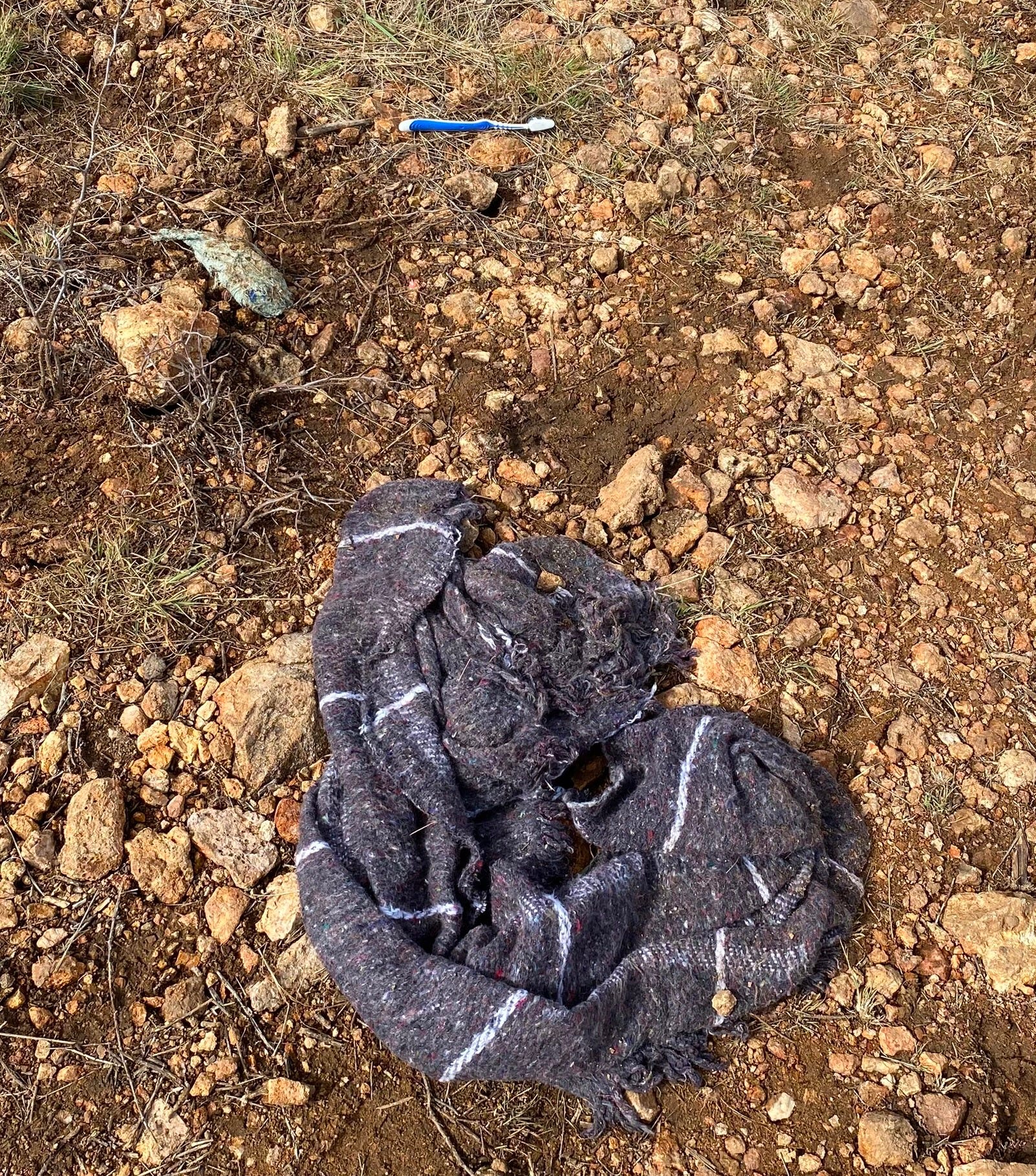
The toothbrush and the garment next to it in the photo were two of several bits of debris that we came across in the Sonoran Desert in Arizona. Some traveler had to decide between clean teeth or shedding one more encumbrance that might hinder his journey across the deadliest migrant corridor on the southern border.
I say “his” because I imagined the traveler to be a man, looking for remunerative work so he could send money home to his family, which could well have been the case. But the traveler could have also been a woman or a child. They could have been seeking work opportunities, or they could have been seeking asylum from violence and persecution in their home country. That country could be in Central America, or in the Caribbean, or Africa, or Asia. All kinds of people make the journey these days.
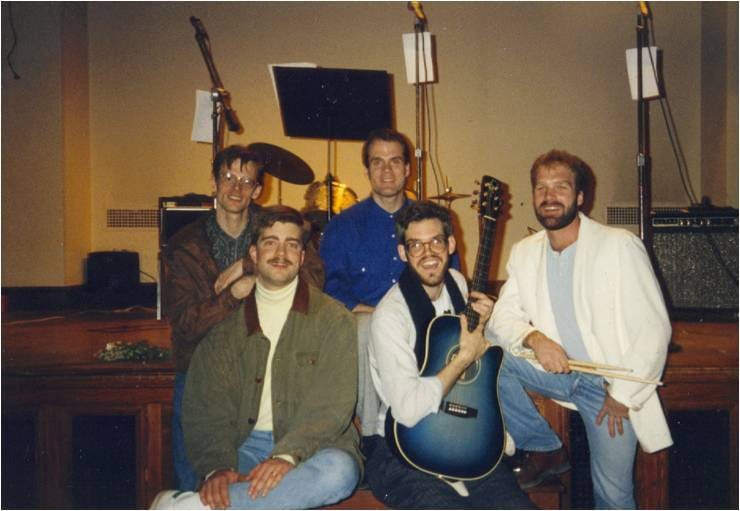
Part of the “long way home” of our cross-country drive was to stop in Sahuarita, Arizona, to visit my old seminary friend (and Zwingli-La bandmate), the Rev. Randy Mayer.
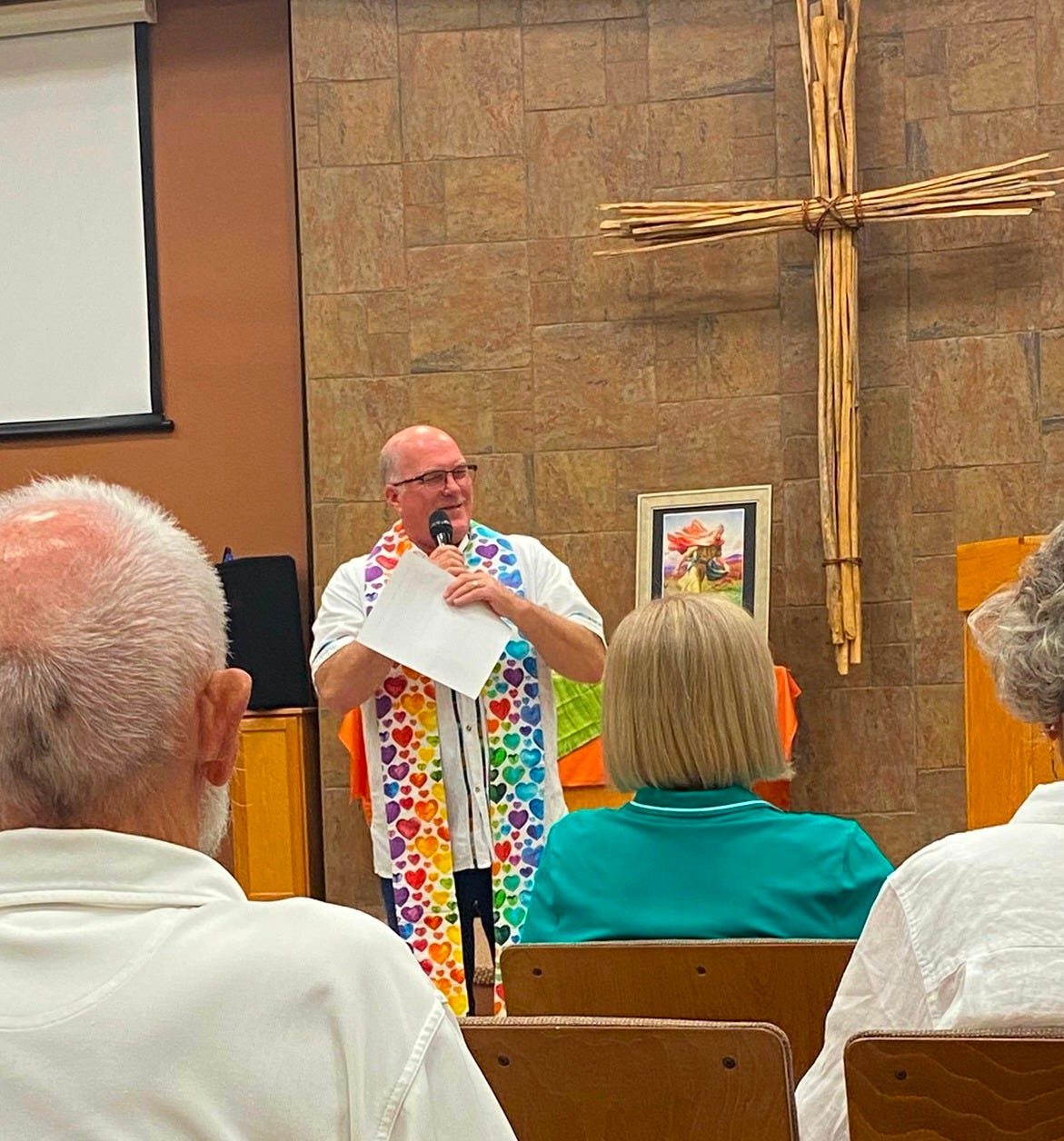
On Sunday morning Jill and I attended worship at Randy’s Church of the Good Shepherd (United Church of Christ).
That Sunday night, Andy invited us to his home to have some dinner and play some music on my ukulele and his instruments. We played some of the old Zwingli-La hits. “Brown Eyed Girl” was Randy’s song.
Early the next morning, Randy drove us to the border to witness the work of the Samaritans, a humanitarian organization which he helped to found.
The Samaritans of southern Arizona came into being in the early 2000s, first in Tucson. Then a complementary chapter formed a few miles south in Green Valley-Sahuarita. These Samaritans, like the good Samaritan in the parable of Jesus, seek to be good neighbors by serving the people closest to them who have the greatest need—the travelers who have been forced by a policy of “prevention by deterrence” to cross the US border in the most punishing environments. Over the past thirty years, this policy has not noticeably deterred undocumented migration, but it has resulted in thousands of deaths.
The main thing the Samaritans do is drop off water and food in the desert. They also provide other life-saving aid: sanitation straws, boots, baby formula, etc. Randy took us along in a Samaritans 4WD vehicle to check on water and food stations.
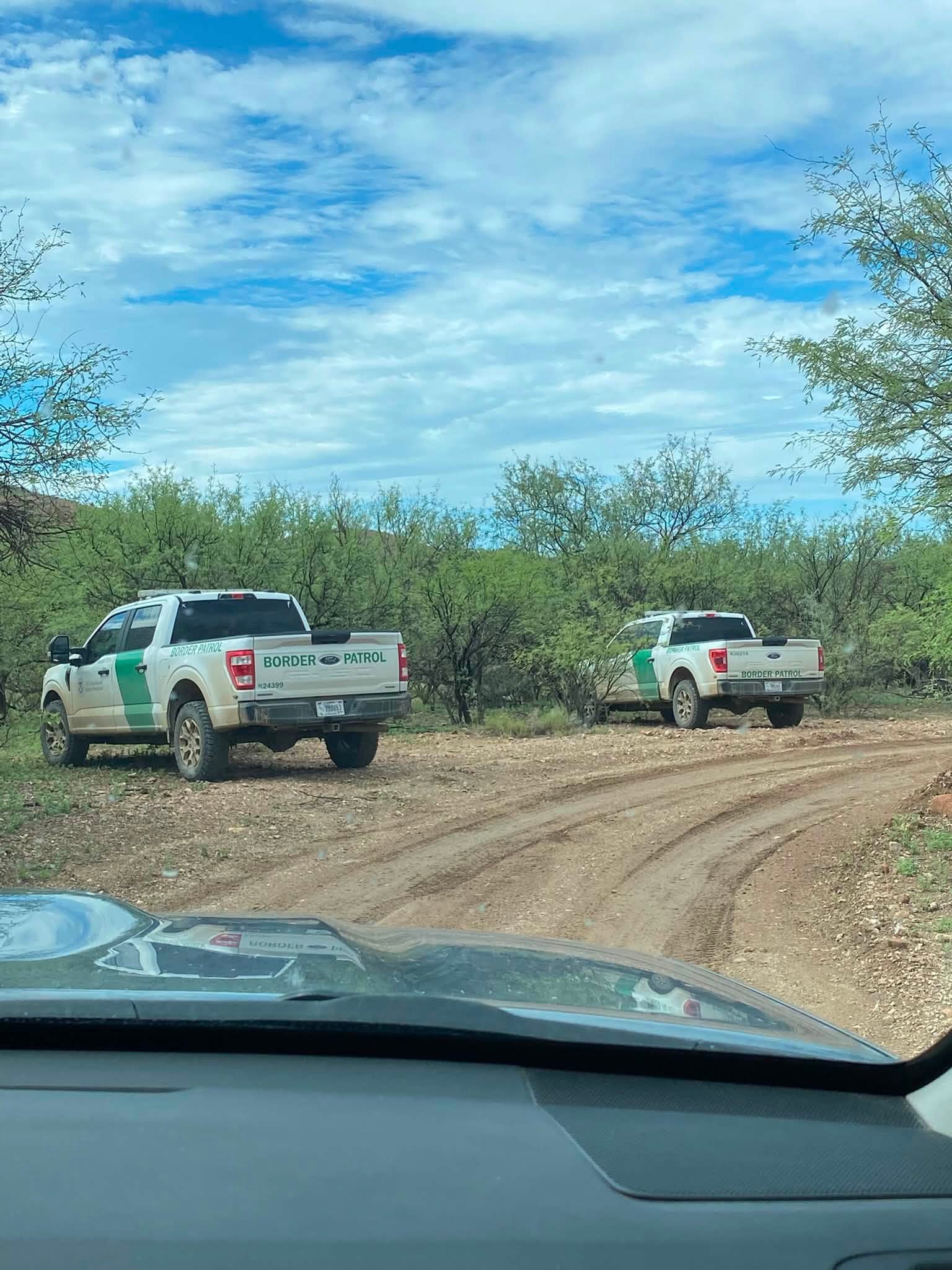
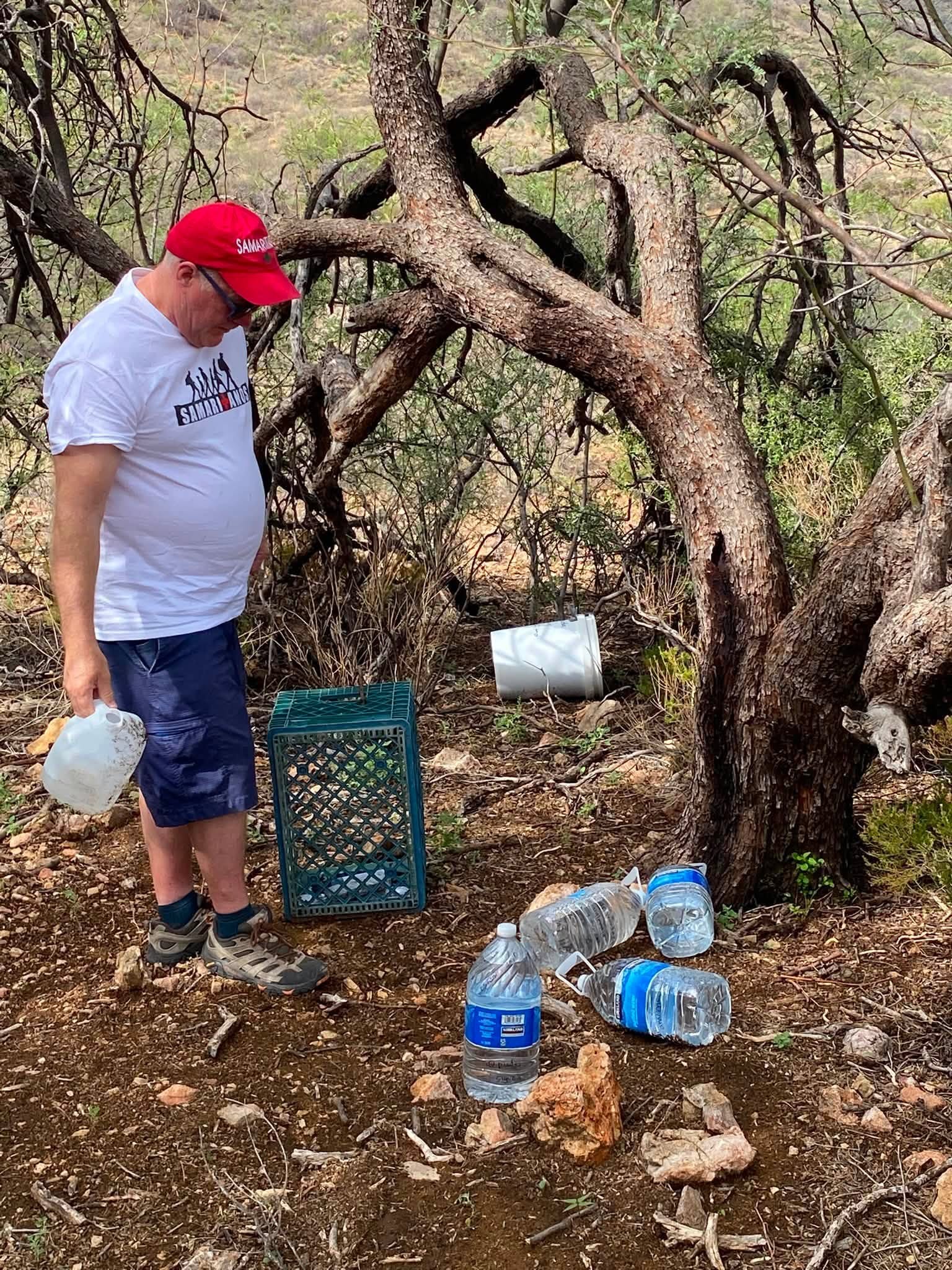
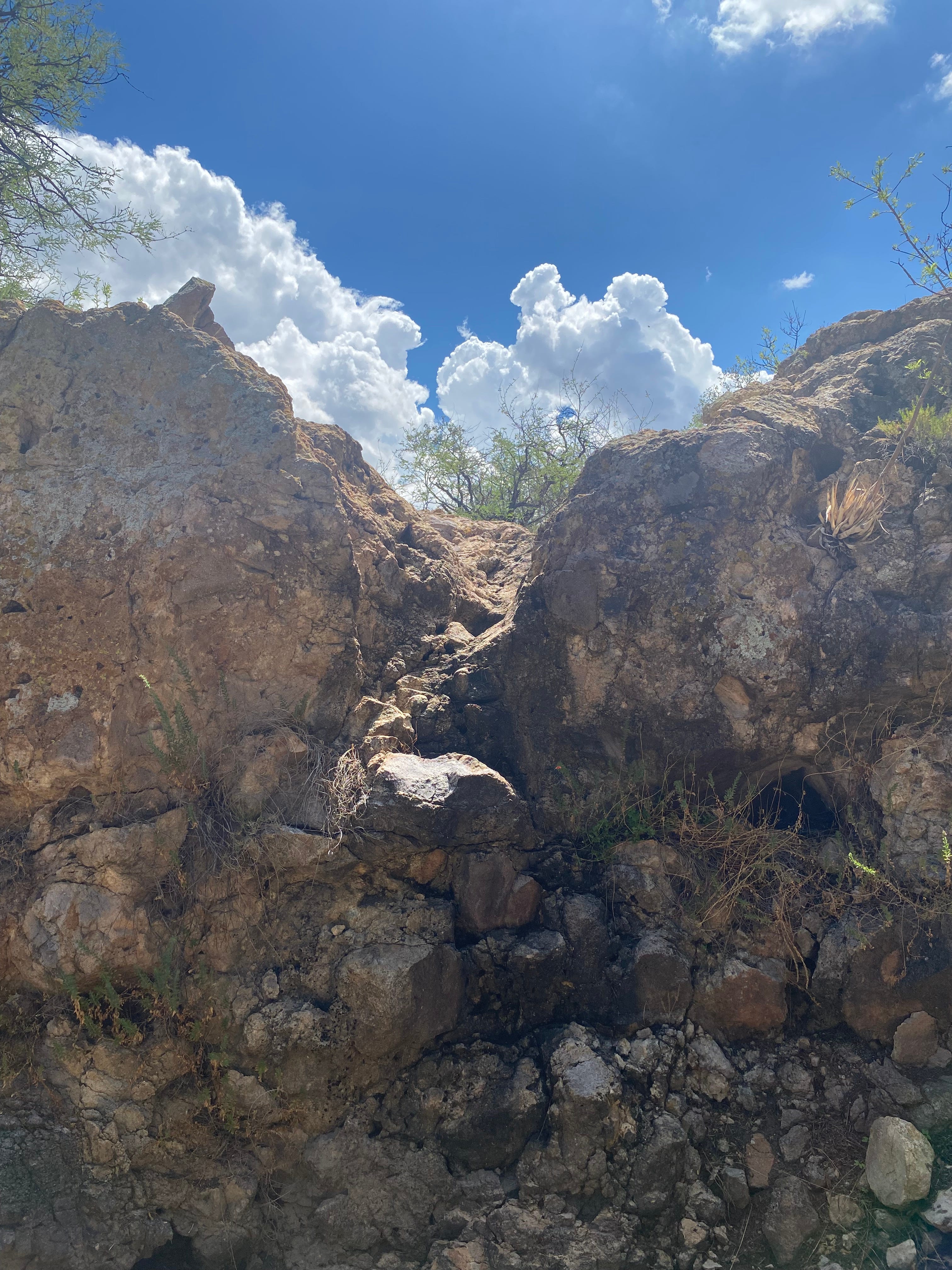
We rode along uneven roads and walked along bristly paths, which at times felt barely navigable to Jill and me. Yet they were too open and exposed for undocumented travelers to make use of. Instead, they clamor over rocks and cut through brush, “guided” by coyotes (smugglers). The criminal cartels that dominate the border make it impossible for travelers to attempt to cross without the coyotes’ “help,” for which they charge at least $6000 per person.
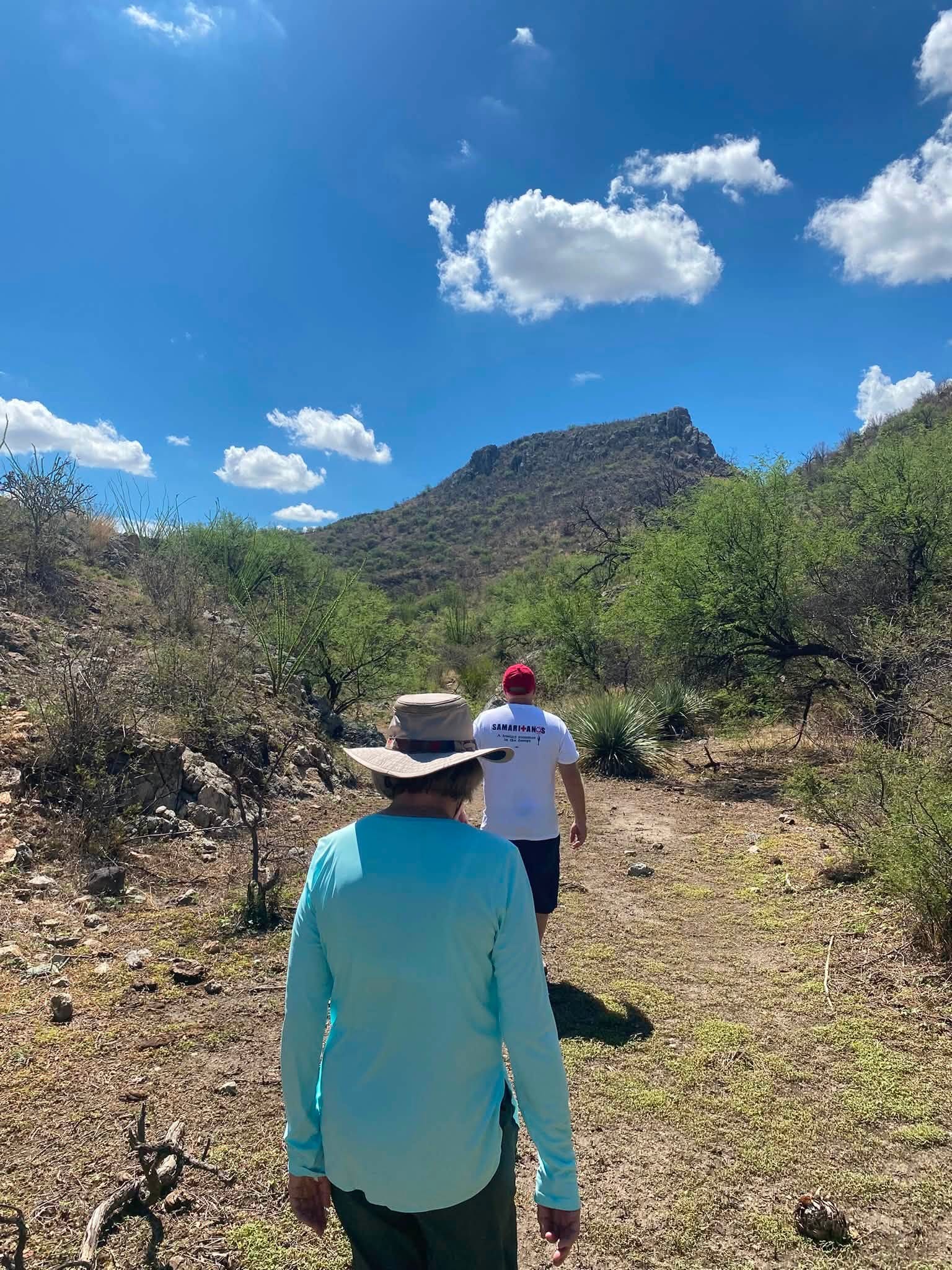
In addition to providing life-giving aid to travelers, the Samaritans have other helping projects on both sides of the border, like the Bibliotheca Esperanza, the Library of Hope, which we visited in Sasabe, Mexico.
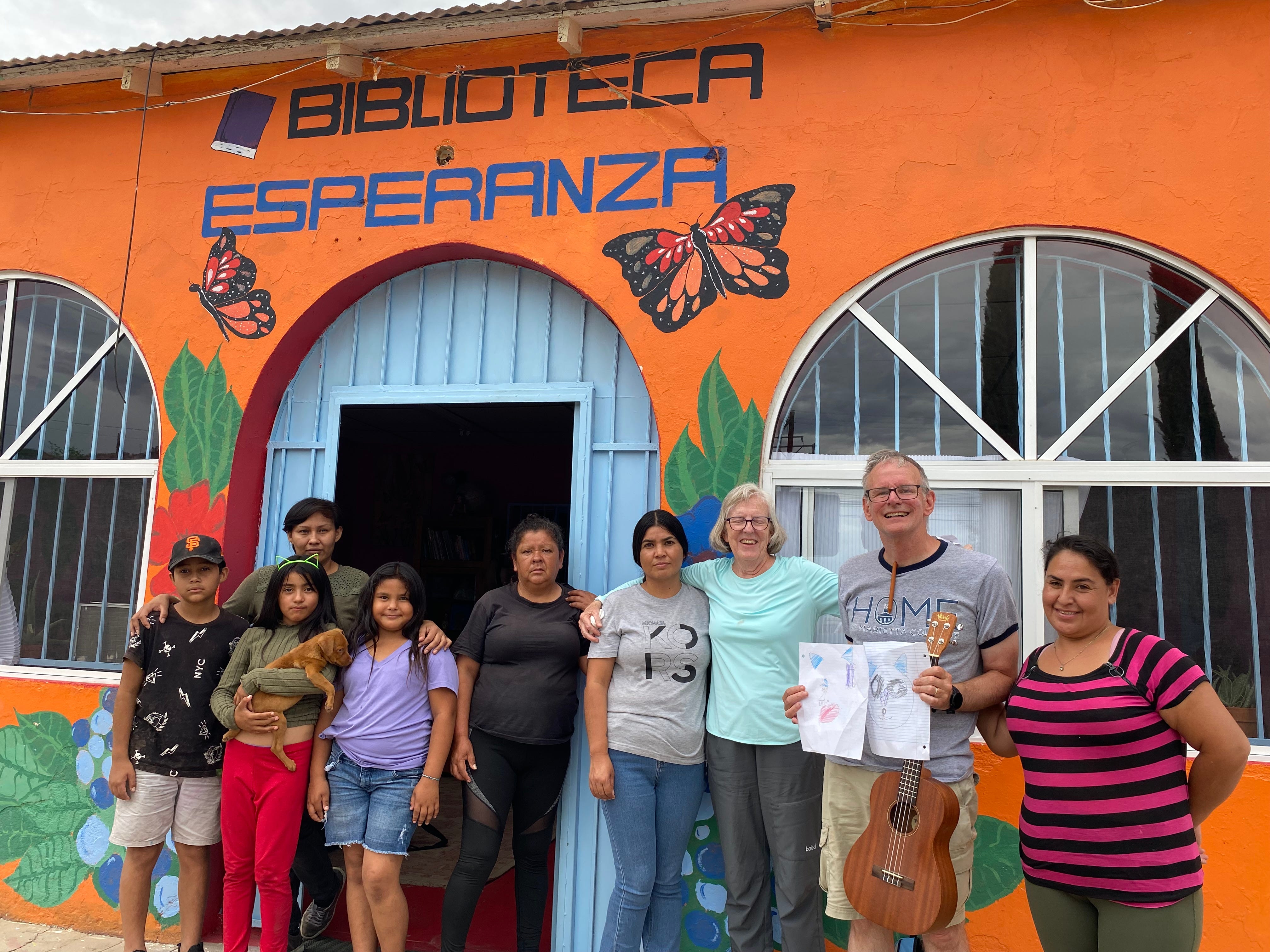
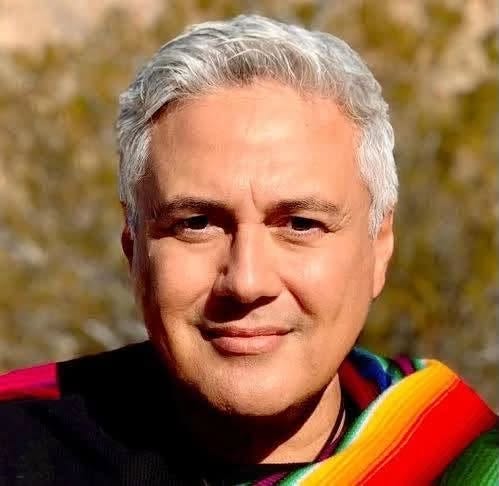
We were met by our hosts, super Samaritan (and artists’ manager and filmmaker) David Damian Figueroa, and some women and children who participated in the library’s programs. They gave us food. Hindered by impassible silty mud on the border wall road, we were too late for the fresh tacos they prepared for us. So we had Hot Pockets, which were perfect. The new bathroom of the Bibliotheca Esperanza was still being built, but one of the ladies took us to use the one in her apartment, which was also perfect.
The Bibliotheca is, of course, a library with books, but it is more than that. It is a community center, a place to hang out and heal. The ladies chatted freely with us in Spanish, which Randy speaks fluently. Jill and I understood a few words, but still felt fully included. The ladies practiced their English with us, having just graduated from the Bibliotheca’s ESL program.
Randy brought his guitar and made sure I brought my ukulele. We sang songs. The children shared a song that David taught them, which he knew from his time as a cast member of Up with People. David explained to us some of the other programs that the Samaritans had been offering in Sasabe, including medical clinics for the people and the many dogs of the town, who seemed to belong to everyone.
We learned that the town was gradually recovering in population and hope after devastating cartel violence from a few years ago. As we listened to the children sing and accepted the drawings they gave us, David explained that the women and children had witnessed their husbands and fathers being killed.
It has become an embarrassing cliché for folks like us, freshly back from a mission trip, to say “we received more than we gave.” But it’s also the honest truth. In the most literal, material sense, we received more than we gave. They gave us Hot Pockets. They gave us the use of a bathroom in a private home! All we brought them was ourselves and a song.
Our hosts also gave us the gift of perspective. There are people who would love to take a cross-country trip just because they want to, rather than out of desperation to survive. There are people who would love to have a stressful job to return to after their journey (all the stresses of a tenured professor—give me a break!). There are people who would love to come home to a house of any age with a roof of any condition, even with unreliable internet (again, give me a break). There are people who would love to travel with a toothbrush and not consider it a luxury. I actually traveled with a rechargeable electric toothbrush and a Waterpik. Dentist’s orders. There are people who would love to visit a dentist.
It is not the responsibility of poor and struggling people to remind people like me how privileged I am, but damn they do a good job of it, without even trying.
Our hosts also gave us the gift of love. One girl (among the group of children on the left in the photo above, with the cat-ear headband, holding a puppy), hugged Jill as soon as she saw her.
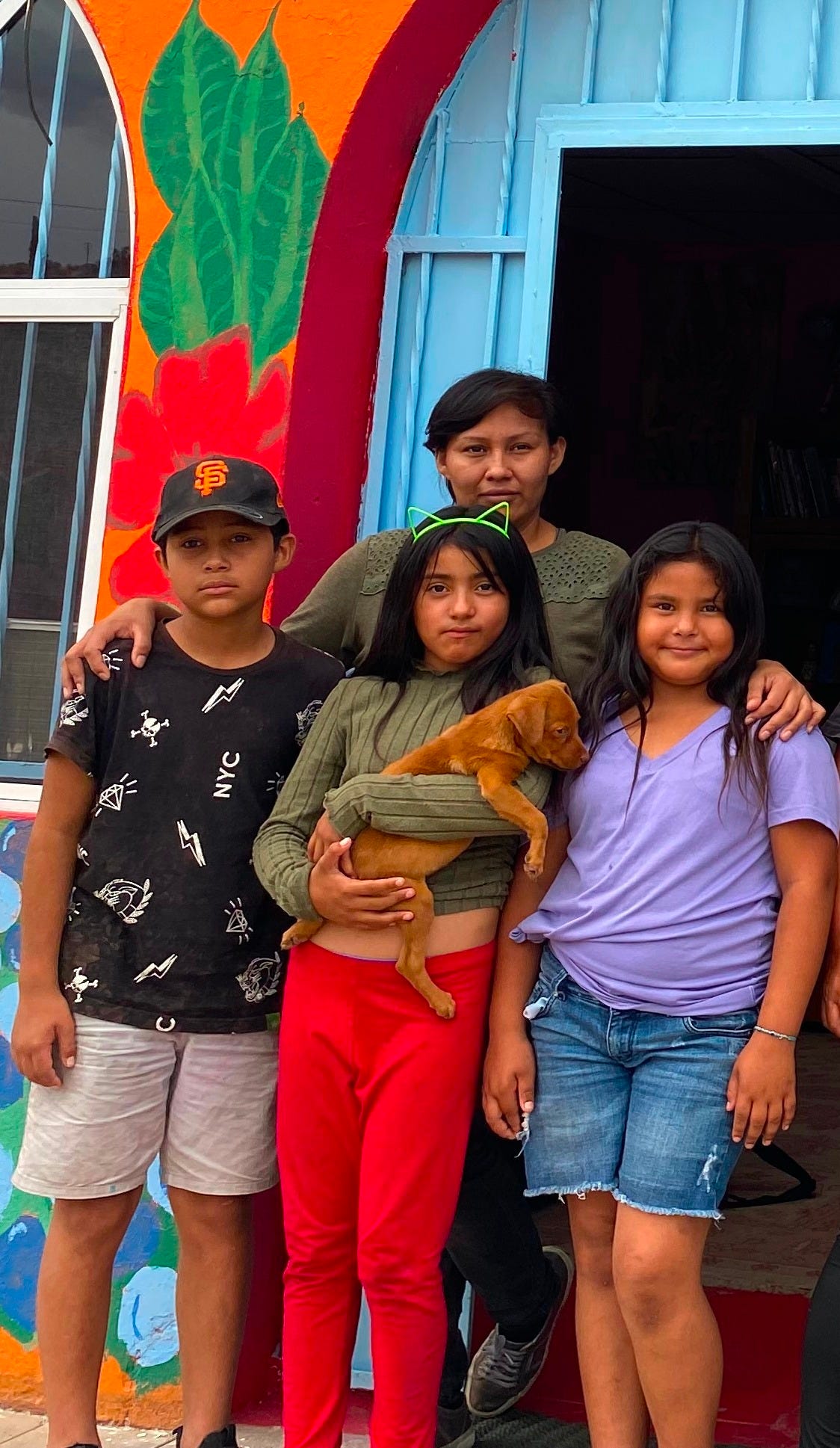
This girl, who had witnessed unspeakable human evil, knew nothing about us except that we came from Samaritans so we must be okay. And she sensed that Jill must be the kind of person who would give and receive a hug (well spotted, I would say).
What are we to do when we are offered such gifts? The first thing to do is receive them graciously. Allow our perspective to be changed. Allow our vision to be altered by the witness of these people’s lives. This means, for me and Jill, acknowledging our own privilege. But more than that, it means accepting the love they offered and giving love back in return. It means speaking up against the lies that are being told about them by anti-immigrant activists, including those who are directing the policy of the US government. The migrants on our southern border are not bad people who seek to do us harm. They are children of God, image-bearers, who are just trying to survive.
The other thing we can do is make a financial donation to Samaritans, which we did, and you can too. The Bibliotheca really needs that bathroom.
Here are links to the websites of the Tuscon and Green Valley-Sahuarita Samaritans. The websites have links for donations and also offer other ways to become involved, including helping with water drops and making visits like Jill and I did. I also recommend this book, Bearing Witness: Humanitarian Stories from the Arizona Borderlands, a collection of personal essays by Samaritans and other helpers. Randy has a couple of essays in there.