The Strangest Dream
Or how I learned to stop worrying and love my banjo

It’s been a long time since I last posted. A lot has been happening in the world. It’s been a struggle for me. But I am pleased to say that I have at last made peace…with my banjo.
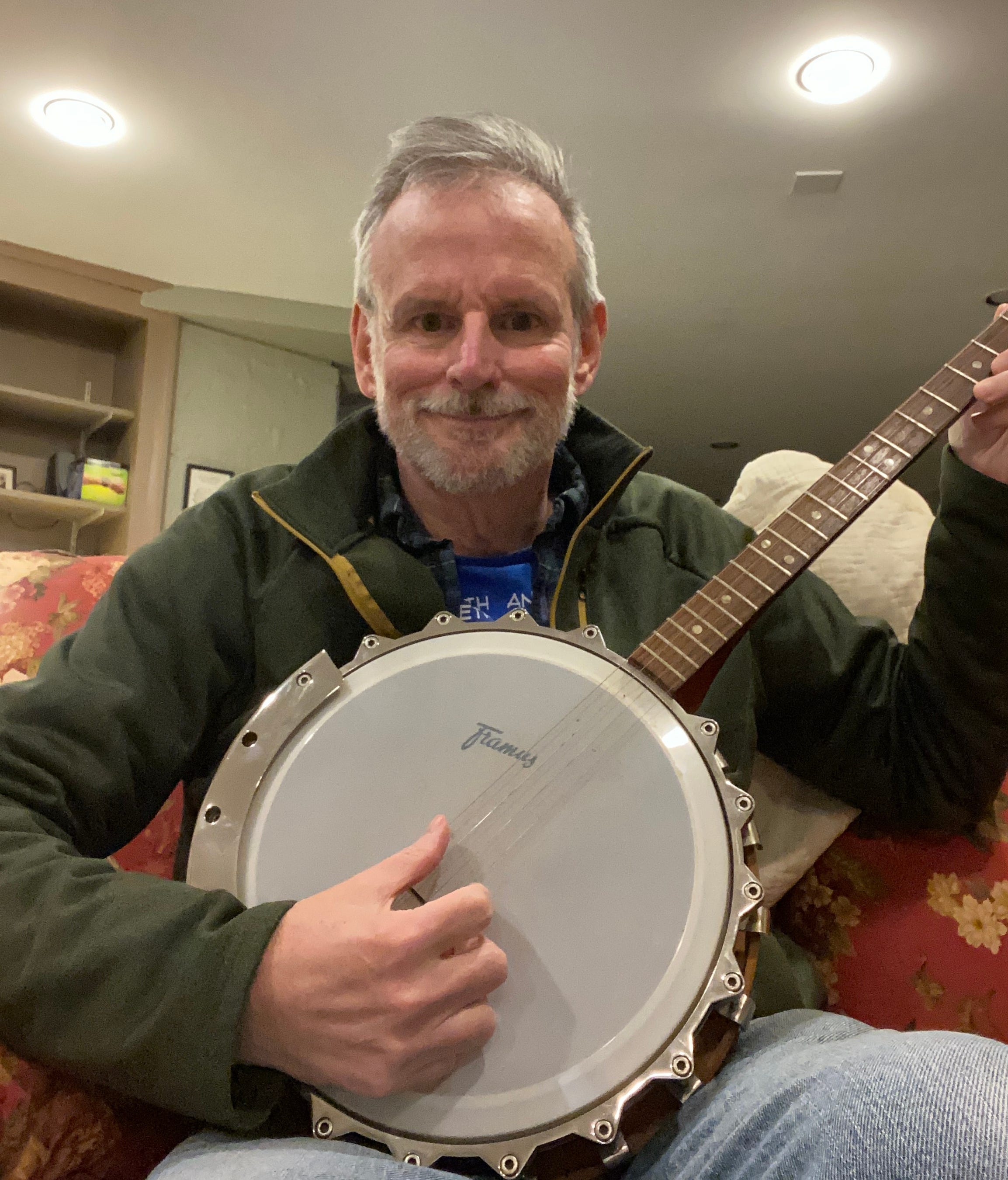
Many years ago, my wife Jill and I honeymooned in New Orleans. I fell in love with Dixieland (or New Orleans style or trad style) jazz. When we got home, I searched for and found a second-hand Framus tenor banjo. I was on my way to becoming the next Don Vappie. But I never got there.
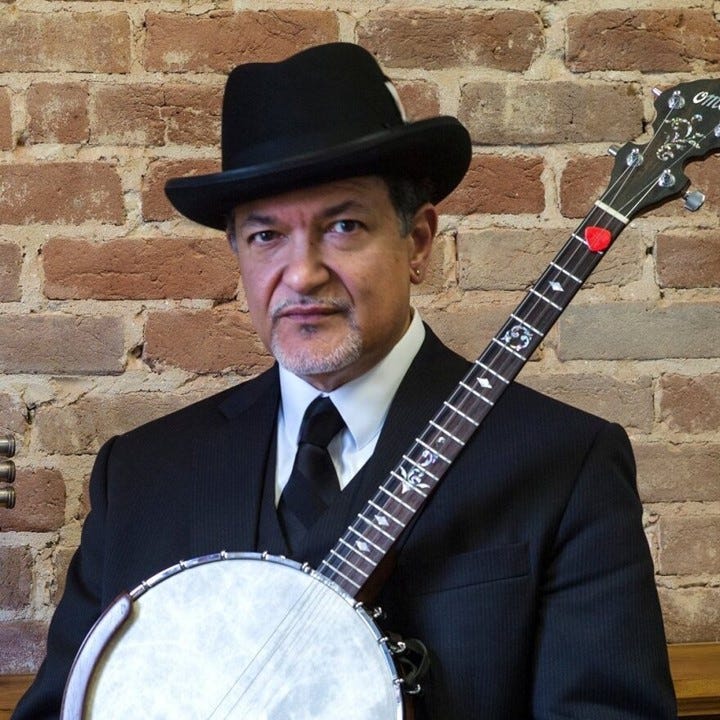
I convinced myself that if I was to be a real jazz banjo player, I had to play a four-string tenor banjo tuned to fifths—like all the New Orleans banjo players did. I couldn’t “cheat” and tune it to fourths like my guitar. I never got comfortable with those unfamiliar chord shapes. My hopes of someday playing with the Preservation Hall Jazz Band faded.
I couldn’t even take consolation in learning the other kinds of banjo music I loved: bluegrass or old-time or folk music. I convinced myself that if I was going to play that kind of American roots music, I couldn’t do it on my four-string banjo. I had to play a five-string banjo, preferably Earl Scruggs style, with brass finger picks.
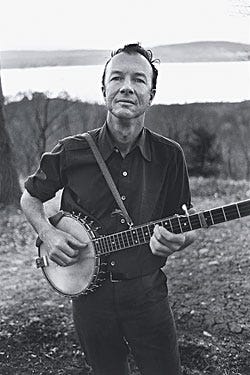
Those things never worked for me. I had tried them on my guitar. The strings always got stuck between the picks and my fingers. So, not only was I not going to be the next Don Vappie, I wasn’t going to be the next Earl Scruggs or Ralph Stanley or even Pete Seeger either. I set the banjo aside.
But I couldn’t bring myself to give up on my dream or the banjo completely. The neglected banjo moved with us to five different homes over our thirty-plus-year marriage, hiding in closets and basements, guilting me with its sad round face whenever I stumbled across it, saying “Please David, aren’t you going to try again to play me some day?”
And finally, I did! The turning point came when Dom Flemons, the American Songster, founding member of the Carolina Chocolate Drops, visited Marietta College this year. I saw him play roots music, brilliantly, on a four-string banjo.
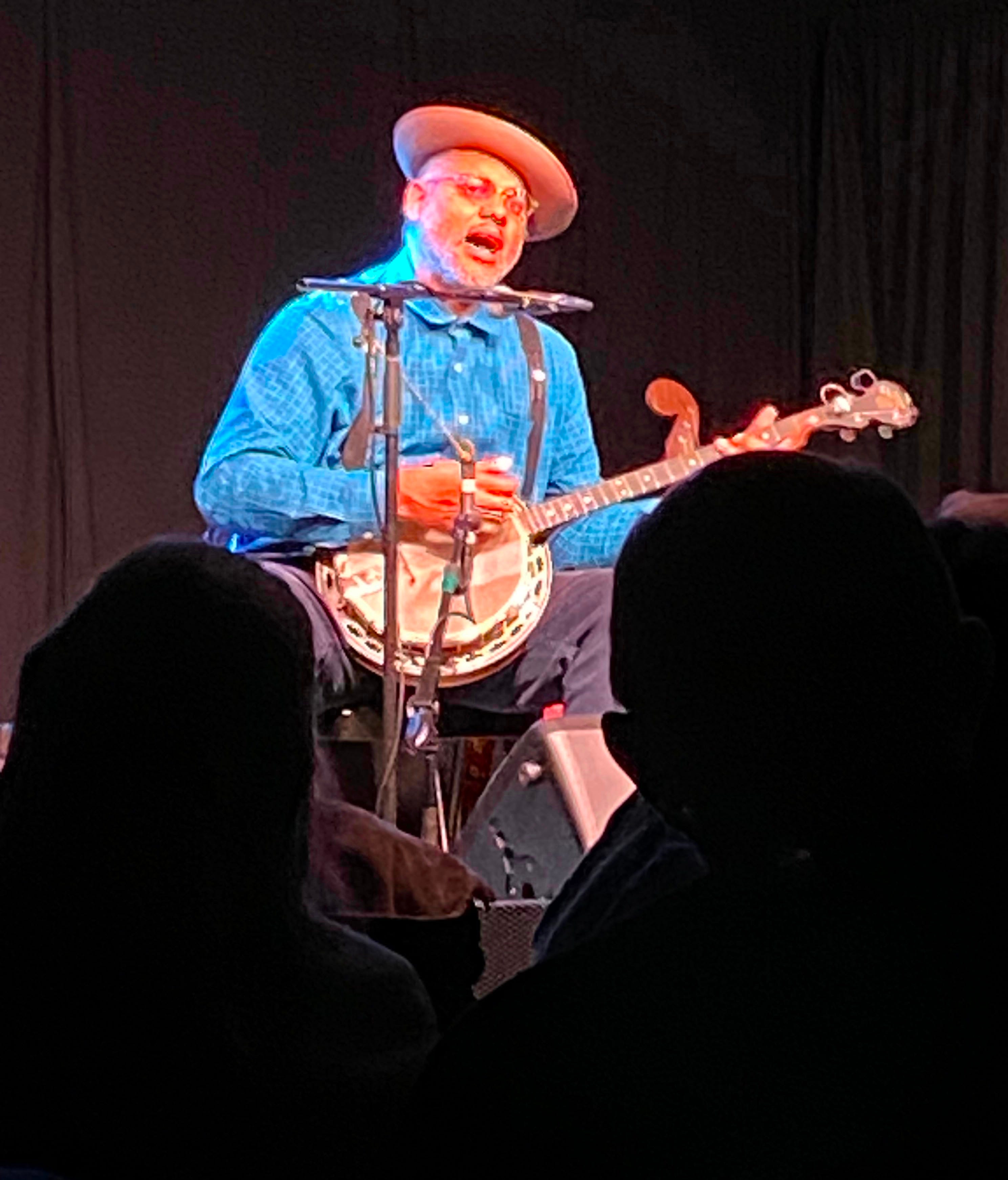
I mean, he also played a five-string banjo, and a guitar, and a teeny-tiny pan flute (called quills), and bones and spoons and other instruments—he’s very talented. But he mostly played a four-string banjo. What’s more, he didn’t tune it to fifths. He tuned it to an open G chord, which is virtually the same tuning as the four high strings of a guitar. And Dom Flemons is in the American Banjo Museum Hall of Fame, so he must know what he is doing.
You know who else is in the Banjo Hall of Fame? Johnny St. Cyr, who played on the famous Louis Armstrong Hot Fives and Sevens recordings. You could call him the original New Orleans Jazz banjo player. And guess what? He played a six-string banjo-guitar that he Frankensteined himself! As it turns out, it’s not the case that “all the New Orleans banjo players” played a four-string, fifths-tuned, tenor banjo.
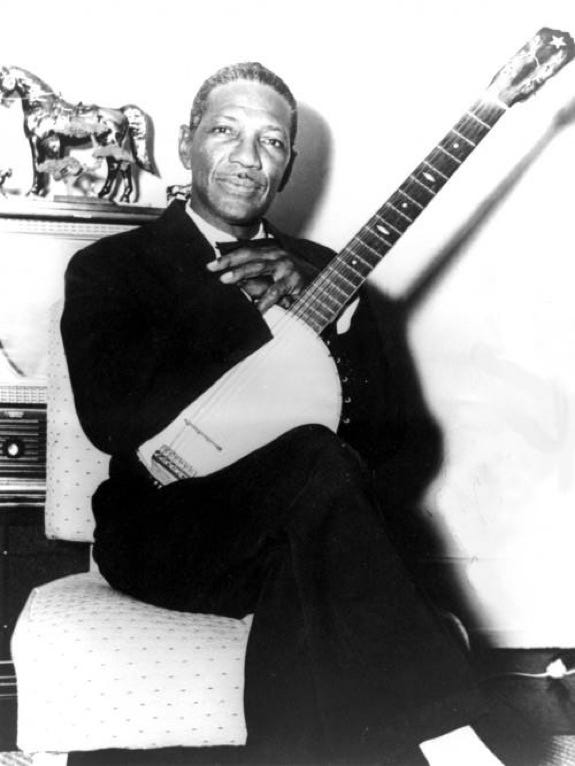
Thus, I learned from the great banjo players that there is no such thing as cheating, as long as you’re playing. You can play a banjo with as many or as few strings as you can find. You can tune it any way that feels comfortable. You can play any style of music that you are able to play.
And I did! I tuned my four-string banjo like a guitar and I played. And now my banjo and I both have happy round faces.
Here we are together in video, along with some other instruments, playing for you a song written by Ed McCurdy and made famous by Pete Seeger, “Last Night I Had the Strangest Dream.”
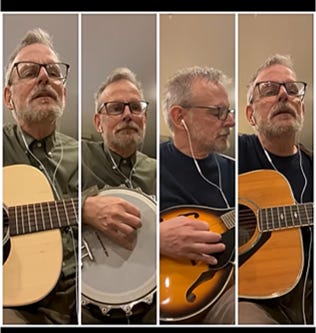
Sing along! It begins, “Last night I had the strangest dream, I never dreamed before. I dreamed the world had all agreed to put an end to war.” Because if I can make peace with my banjo, there’s no reason we can’t have world peace too!
Of course, I know it is more complicated than that. Despite all the jokes to the contrary (there are a lot of banjo jokes), making world peace is a little more difficult than tuning a banjo.
And of course, the real world is much more complicated than the one presented in the song “Last Night I Had the Strangest Dream,” in which the world’s leaders gather into one “mighty room.” They easily agree “to never fight again.” All that is left is for the people of the world to dance in celebration.
I did not originally intend to write this Substack about my banjo or about a peacenick song from the 1950s. I was going to write about just war, a set of principles articulated by the fifth-century theologian Augustine and by many others since.
I was going to write about how, according to the just war tradition, the use of force can sometimes be justified, but only for a just cause, and only as a last resort, and only if noncombatants are protected.
Even then, war should never be an end in itself. The goal of a just war should never be the destruction of enemies. War should always be a temporary means of achieving a just peace among nations.
I was going to explain how the current US bombing campaign in Iran did not fit the criteria of just war.
Actually, roll that back. I originally had intended to write about just war back in September of last year. The US military had blown up a boat in the Caribbean, killing the people on it, under suspicion of drug trafficking—with no arrests, charges, or trials. I was going to write about how this attack was not in keeping with the principles of just war.
But before I could sit down to write that essay, the situation changed. So, I was going to write about how blowing up, not just one boat in the Caribbean, but a hundred odd boats around the world, under the same shady rationale, was not just war.
But again, a new situation arose. So, in January, I was going to write that the US president sending the military to invade a South American country and abduct its leader, without consulting Congress or anyone else, was not just war.
Then, that same month, I was going to write about how US government agents killing protesters on American streets was not a justifiable use of force. (I actually did write a Substack about that).
Now, in March, as I sit down to write about what is happening in the world, my zone is too thoroughly flooded to write about just war. So, I wrote about my banjo, and about “The Strangest Dream” instead.
Whether you are learning to play a musical instrument or trying to make peace in the world, it is best to start simple. Before trying to learn complicated jazz chords, play a simple folk song. Before trying to explain the complexities of the just war theory, begin by stating the simple truth.
Peace is good. War is bad. If we could all learn as individuals and nations to work out our problems fairly without resorting to violence, everyone (well, almost everyone) would be happy. It seems obvious, but maybe it’s not obvious enough, especially to some of our political leaders who make a fetish of violence.
Before we begin to struggle with the complexities of restraining evil in a complicated, fallen world—before we consider the possibility that a war may be a tragic but necessary path to a just peace, we need to have a vision of what that peaceful world would look like.
As did the prophet Isaiah, who envisioned swords being beat into plowshares and spears into pruning hooks, and the wolf dwelling with the lamb, the leopard lying down with the kid, and a little child leading them.
Even if our vision of peace is just the lyrics of a naïve folk song, even if it is just a dream, even if it is “The Strangest Dream,” it doesn’t hurt to dream out loud. Dreaming out loud is the first step toward making that dream a reality, or at least making the world as it is a little more like the world as it should be.