
Render unto Caesar?
Singing Lee Greenwood in church?

In honor of the Fourth of July, I am republishing my post from two years ago, which itself is about experiences from several years earlier. The surge of Christian nationalism in its current form is a new thing, but it raises the question of loyalty to God versus loyalty to Caesar, which is as old as the gospel itself, and which continues to be relevant on this 250th anniversary of American independence.
One Sunday years ago, when I lived in another town and taught at another college, I walked into church one morning and was greeted by a gospel quartet. It was the summer, when it was appropriate to have a different, fun kind of service. The whole service was given over to the guest musicians. No sermon (yay!)
I love all kinds of music, including gospel quartets. These guys were good singers—professional performers, singing joyful, uplifting songs. They sang to prerecorded tracks. I prefer live instruments, but you can’t everything.
I was getting caught up in the experience, when, several songs in, approaching the high point of their performance, I heard a familiar three chord introduction come from the PA speaker.
It could have been any number of songs that began with those chords, but I was pretty sure I knew what was coming. The lead singer began the verse, “If tomorrow all the things were gone, that I worked for in my life, and I had to start again, with just my children and my wife…” and I thought, “Oh no.”
As the song continued, the people in the pews nodded in recognition. The first verse finished. Then there was the chorus, “I’m proud to be an American, where at least I know I’m free…” The people around me became more and more moved, and I became more and more anxious.
So, what do I have against Lee Greenwood? What do I have against America?
I haven’t met Lee Greenwood. I don’t have anything against him or his famous song. It’s not my favorite song of its kind, but I like it just fine.
I just didn’t like it then, in that moment, in that place—not in church, not at the dead center of the service. It just wasn’t appropriate. It was a confusion of values, a confusion of something important with something of utmost importance. To use Jesus’s language, it was a confusion of those things that belong to Caesar with those things that belong to God.
The quartet kept on singing. When we got to the lyric “Stand up!” one of the singers called out, “Stand up if you love America!”
Now, I should point out, there were not a lot of people present—no crowd to get lost in. I was up front and visible. My wife and I were active members of the congregation, teaching Sunday school, so the people knew us. Rightly or wrongly, I had the feeling people were watching me.
What was I going to do? I had two choices. I could stand up or I could stay seated. If I stayed seated, people would think I didn’t love America, which isn’t true. But if I stood up, I would be going against my own heart, doing something I believed was inappropriate. That song, and more specifically, the singer’s command to stand up if I love America, put me in a no-win situation.
Similarly, in the gospel of Matthew (22:15–22), the Pharisees and the Herodians tried to put Jesus in a no-win situation when they asked him whether it was lawful to pay the tax to the emperor. It was a trap. If Jesus answered yes, and approved paying the tax, he would be making himself very unpopular as a collaborator with Rome, the imperial colonizer of Judah. If he answered no, and disapproved paying the tax, he risked being reported and arrested for breaking the law.
So, Jesus didn’t answer yes or no. Instead he asked them to show them a denarius, the Roman coin with which the tax would be paid. Then he asked whose picture was on the coin. It was the emperor, Caesar.
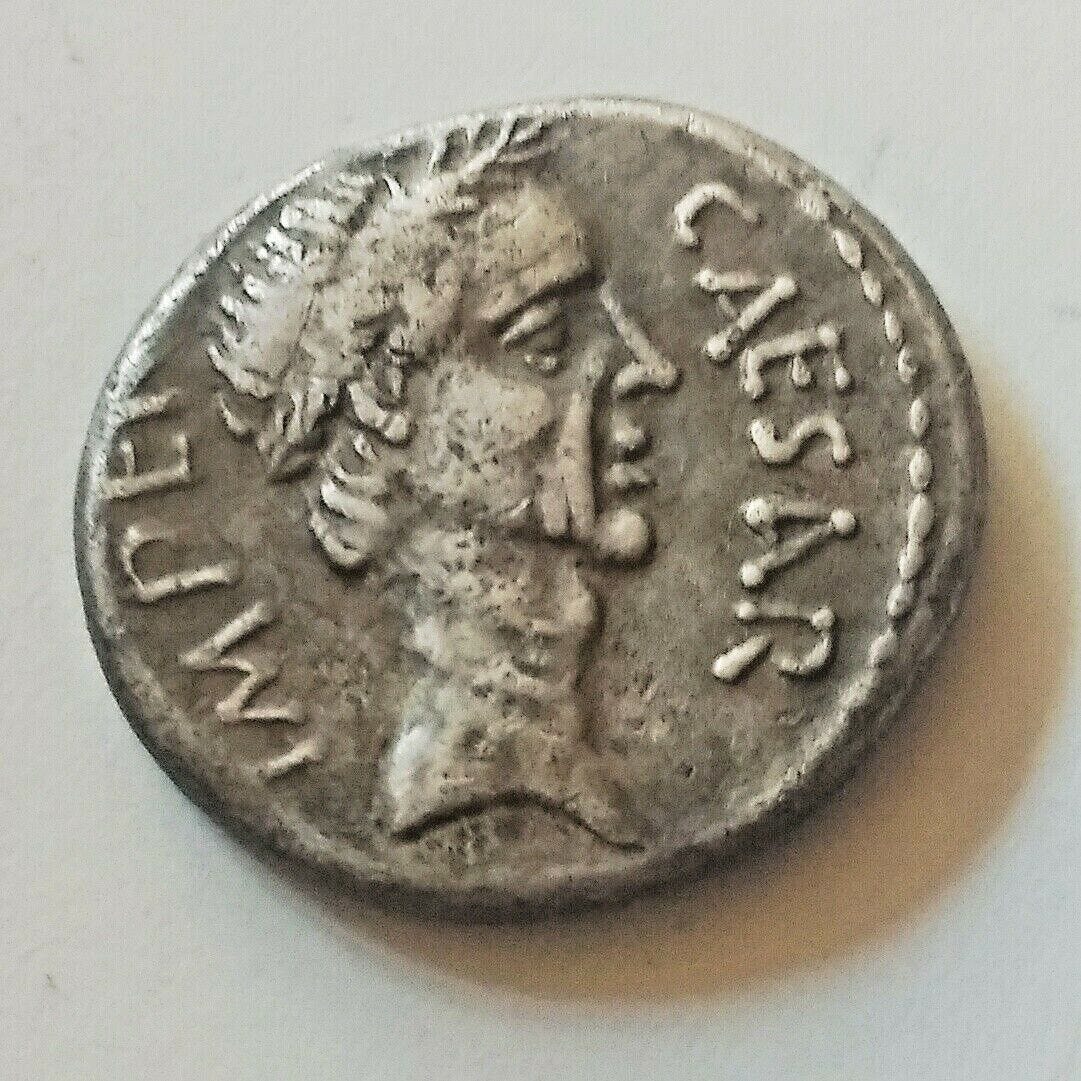
This is a typical strategy for Jesus. He doesn’t answer his critics’ questions on their own terms. Ask Jesus a direct question, like “Who is my neighbor?” and he is likely to start telling you a story about a man traveling from Jerusalem to Jericho. Ask him a direct question like, “Should I use this money to pay taxes to Caesar,” and he is likely to start asking you questions about whose picture is on the coin.
Along the way, Jesus does address your original question, but he also answers some questions you weren’t even thinking of. He even starts making you ask questions of yourself. Questions like, “how can I be a good neighbor to others?” And “where does my ultimate loyalty lie?”
Jesus’ conclusion is, “Render unto Caesar the things that are Caesar’s, and render unto God the things that are God’s.” Matthew says that Jesus’s audience was “amazed” (literally, “in shock”) at his answer. I don’t blame them. I feel like I’m losing my senses also, trying to figure out what Jesus was saying.
I’m not the only one. Many have struggled to understand what Jesus meant by this answer. Over the centuries, tons of theological and political baggage have been piled on this brief statement by Jesus. It has been used to defend impossibly contradictory theories, ranging from the right to popular revolution to the divine right of kings.
These theories all fall short. Even if they’re not completely wrong, they all err when they are applied across the board, in all circumstances. They err when they try to make Jesus say too much. This is something we Christians are always tempted to do. We want Jesus to say more, to give us more specific guidance than he actually gives.
Jesus doesn’t teach us a comprehensive philosophy of church and state, here or anywhere else in the gospels. Jesus doesn’t teach a comprehensive philosophy of anything. Jesus does not give us a rule book that tells us what action to take in every possible circumstance. Jesus doesn’t even say, with a yes or no answer, whether it was proper for his contemporaries to pay taxes to Caesar. Much less does he tell us whether, in our century, it is OK to sing “I’m Proud to Be an American” in church.
Instead, Jesus leaves it to us to figure out. We believers are to be “Jesus theologians,” as one commentary puts it. We are to internalize the life and teachings of Jesus, and to “actualize” them in our own lives in ways that are appropriate to our different situations.
Implicitly, Jesus’s answer to the Pharisees’ question was yes. It is appropriate for Jews to pay taxes and follow the laws of Caesar in most circumstances. That’s the price of living under Roman rule. But Jesus teaches his listeners something in addition to this. Rather, he reminds his listeners of what they already know: that there is a difference between what is owed to Caesar and what is owed to God. Don’t confuse the two. And remember it is God we owe our ultimate loyalty to.
So, what does this mean to those of us who try to follow Jesus now? How do we, as “Jesus theologians,” apply his principles to our current lives. What does it mean for us to render unto Caesar those things that are Caesar’s. We don’t live in ancient Rome, and we don’t have a Caesar. But we have a nation and we have a government, and we have to figure out the balance between what we owe our nation and what we owe our God.
We owe our nation the duties of citizenship. This means doing things like paying taxes. It means following laws, even laws we don’t like, except in the most extraordinary circumstances.
In our democratic society, it also means using our constitutional power as citizens. It means using the power of speech, of assembly, of the press, and of the ballot to shape our government to better serve the common good and to change laws if necessary.
In extraordinary circumstances, when laws are clearly unjust and can’t be changed by ordinary means, we can serve our country through civil disobedience. Acts of civil disobedience are to be done openly, lovingly, and with a willingness to accept the consequences, as Martin Luther King said.
What we owe God is to maintain that distinction between God and Caesar, between God and country. We must recognize that whatever else Jesus might have meant, he definitely meant that God and country are not the same. We must be careful not to merge them together.
We Christians should be concerned when we see people uncritically combining symbols of faith with symbols of the nation, even on a T-shirt. A cross made out of the American flag should make us anxious. We should be even more anxious when guns are added to the design. We should be anxious if patriotic songs are finding their way onto center stage in what is supposed to be Christian worship. Jesus doesn’t tell us in advance to say yes or no to any of these things. But he does raise a warning sign.
When we lose the distinction between God and Caesar, between God and country, we clearly are not doing right by God. By making our nation equivalent to God, we are not only denying the priority of God over all other things, including nations, we are also denying the universal love of the one God, who loves all people of all nations equally.
Hyper-nationalism in practice is usually even more exclusive than this. It is not only exalting one nation over others, but one vision of what it means to belong to that nation over others—implying that there is only one political, religious, or even racial way to be an American.
Which brings up another point, when we lose the distinction between God and Caesar, between God and country, we are not really doing right by Caesar either. We are not doing right by our country. It’s been my unscientific observation that the folks who make a very public demonstration of their adoration of national symbols, who sometimes literally wrap themselves in the flag, are often the ones who are not doing (or at least not willingly doing) all the ordinary things that we do owe the civil government, such as paying taxes.
The best way to respect our country is to respect it for what it is and what it is not. Our proximate loyalties are to things like nations or governments, but our ultimate loyalty lies elsewhere. Augustine, the fifth century theologian, said that Christians should regard themselves as pilgrims and exiles in this earthly city, knowing that they ultimately belong to another, heavenly city.
But while we are in exile, we are to seek the good of the earthly city. In our country, this means being stewards of the privilege and power that we have as citizens of a democracy, to make the earthly city a little more like the city of God, a place where all people are able to flourish and achieve their potential as human beings, created in God’s image. That is the way to render unto Caesar the things that are Caesar’s, and to God the things that are God’s.
For the “Jesus theologians” quote see Eugene Boring, “Matthew,” in New Interpreters Bible, Vol. 8, p. 421.
And another thing. Why is pride a virtue? I thought it was one of the seven deadly sins. I thought pride commeth before a fall. So, why extol pride? Shouldn't we scorn pride? Shouldn't be be ashamed of being proud? I am not proud to be an American. How could I be proud of something that was not my decision. I had no choice in my birth location. I'm not proud to be white or straight or cis, or privileged, or gray-haired. I do not wish to be proud of anything. Rather, I'm grateful to be privileged and grateful to be an American. All those other things are just facts of life, and not worthy of pride or shame. I am grateful to be an American, and willing to work to keep America a righteous nation, one with no established religion, but welcoming and respectful to those of all faiths.
So, did you stand up?