
"Emphasize with Their Plate"
Entries in the Someday Humor Book

October 31 is Reformation Day. I like to think of November 1 as Luther’s Hangover Day (“I nailed what to what?”). In honor of Martian Luther, I am re-posting this piece on student’s mistakes.
“David Livingstone was a Scottish doctor who was born in the year 1813 and died in 1873, and later a missionary.” That would be a neat trick if he pulled it off. I can’t imagine a more convincing missionary than one who had actually risen from the dead.
Of course, Dr. Livingstone did not begin his missionary career after he died. If he had performed such a remarkable feat, he would be remembered for it, rather than what he actually is most remembered for—being recognized by somebody else (I presume).
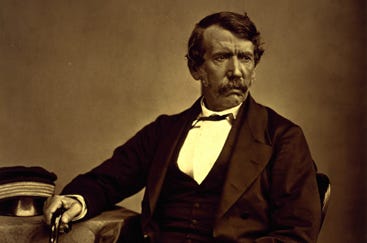
The quoted passage above is from a student’s paper. The class was “Christianity: A Global History,” taught just this past semester (spring of 2024). It was one of the most recent quotes to be added to a Microsoft Word document I have been maintaining for a dozen years, with the file name “Humor Book.”
I created File Name: Humor Book in the spring of 2012, the first semester I taught “Christianity: A Global History.” The first entry was a quote from a student’s paper for that brand-new class: “Martian Luther said in his Preface to the Epistle to the Romans, ‘Faith is not enough. You must do works if you want to be virtuous and get to heaven.’”
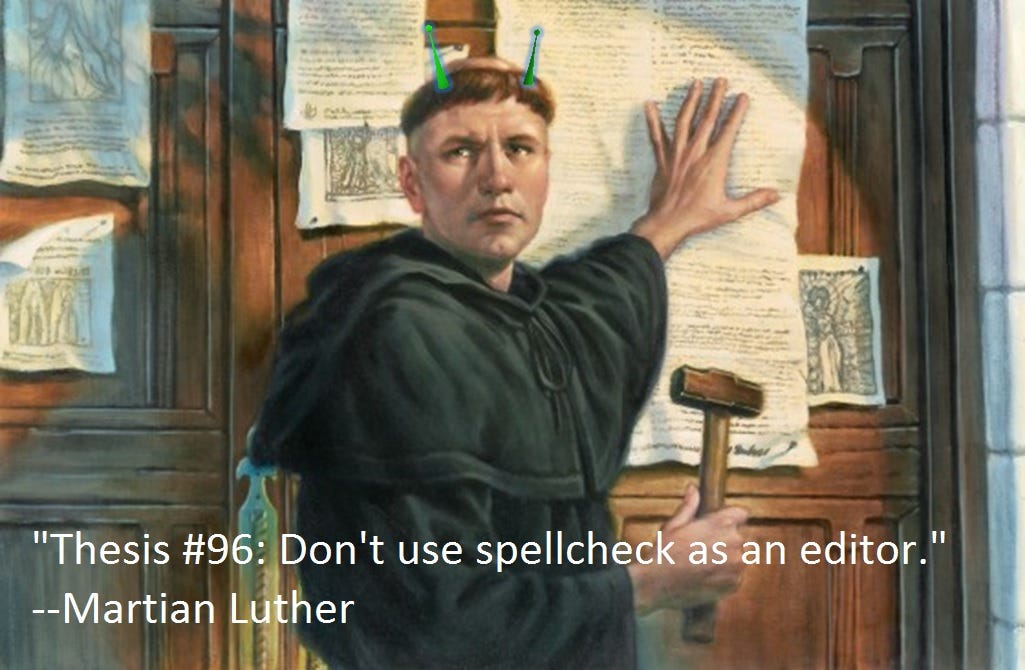
It’s not the funniest student error ever. I had been teaching for several years at that point, and had come across Martian Luther (and Martian Luther King, Jr.) before. But this Martian Luther not only had his name spelled wrong, he was quoted badly out of context. The student had attributed to Luther the position he most vehemently disagreed with. The real Martin Luther, of course, believed in salvation by faith, not works. Sola fide (“faith alone”) was for Luther the gospel itself, the idea he lived for and was willing to die for. The student may as well have written, “Martian Luther King said in his Letter from Birmingham Jail, ‘Violence really is the answer.’”
It was the kind of student error that made me sad and made me blame myself: not just a little awkward grammar (like the David Livingstone reference quoted above), but a profound misunderstanding of an important part of the class. It was not the worst such misunderstanding I had come across in my career. It was not as bad as that of the student who, years earlier, thought that a PowerPoint slide listing the misogynistic assumptions of the Malleus Maleficarum (a 15th-century witch-hunting manual) was meant to be an accurate list of women’s faults. (Adding to the pain, this student—a woman—wrote that she agreed on every point: women are weak in intellect, superstitious, and overly sexual. No wonder they are likely to become witches.)
So, my original inspiration for creating File Name: Humor Book was not so much to laugh but to keep from crying, and maybe to look back and laugh much later, when I would gather the funny student sayings I had collected over the years into a “humor book.” You know the kind—a half sized, paperback, rectangular book with one captioned illustration per page (leaving plenty of quotes in the file for sequels). The book would be found in the “humor” section of the mall bookstore, way in the back with the Mad books. It would have a title like Happiness is a Warm Typo. And it would be a best seller, because no one else ever had such a great idea.
Perhaps my knowledge of the publishing business was a little out of to date. The humor book may or may not ever happen, but I have continued to make additions to File Name: Humor Book over the years. Over time, I hope, I have learned a few things about teaching difficult historical material. This may be why, I am pleased to say, very few entries in the file are based on the kind of egregious misunderstandings described above. They are not the kind of student errors that make me sad. In fact, quite the opposite. I have come to appreciate and enjoy even the most awkward student writing, as long as I can see that the students are trying to learn.
Students (some of them, anyway) like it when I tell jokes in class—not because my jokes are funny, but because they show that I am human. I enjoy reading the entries in File Name: Humor Book for the same reason. They show me that the students who wrote them are human, which, in the age of ChatGPT, is not something to be taken for granted.
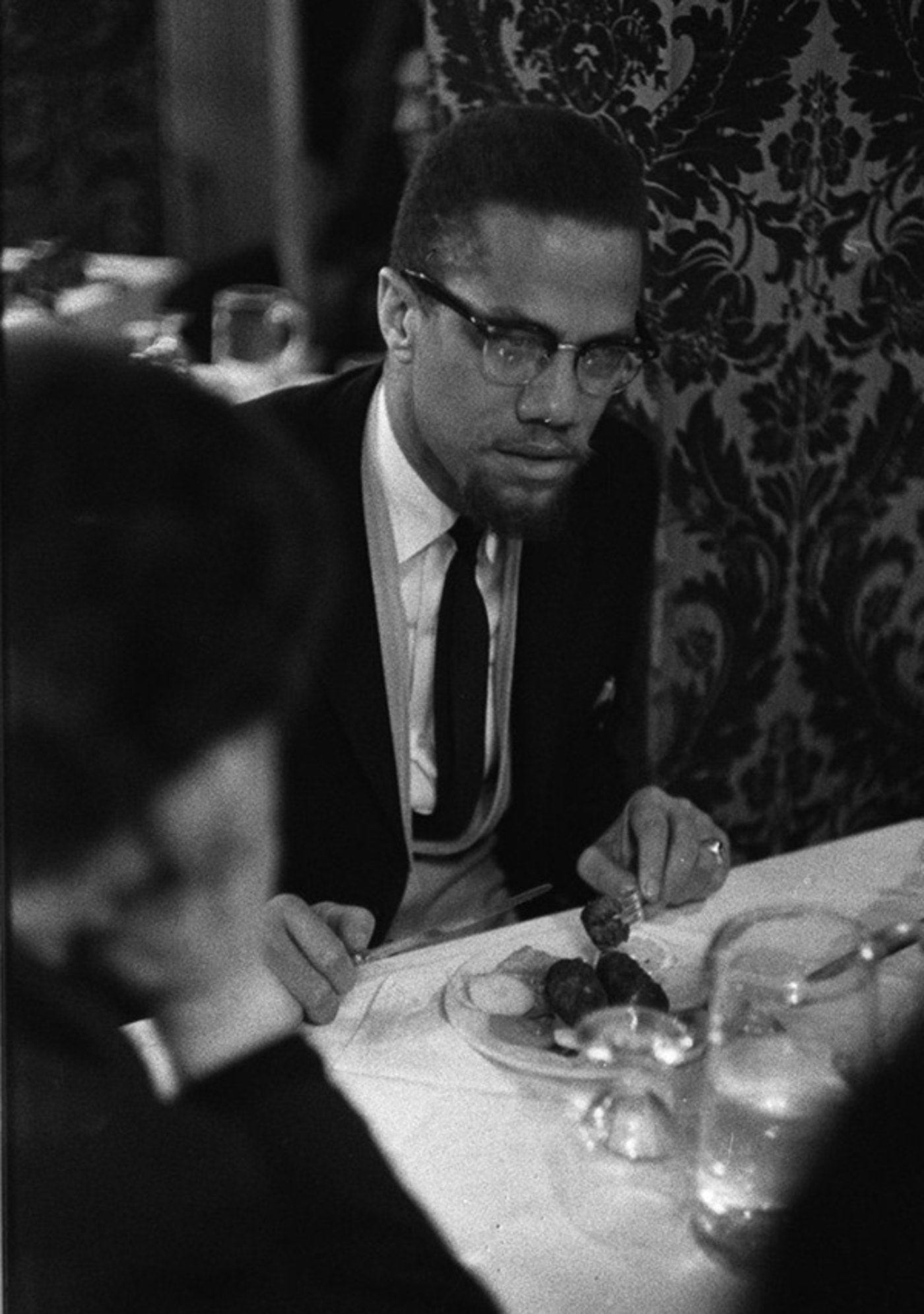
Nothing shows the humanity of a writer like a mondegreen, a misheard or misinterpreted expression. Computers, despite the metaphorical language we use to describe their processes, cannot hear or mishear. They cannot interpret or misinterpret. Why did so many Black Americans join the Nation of Islam in the 1950s and 60s, according to a student in my African American religion class in 2014? Because the NOI “emphasizes with their plate.”
Get it? It took me about four or five readings. “Empathizes with their plight” was the misheard saying the student was referring to. AI, even on its worst (or best?) day could not have come up with that beautifully human error. The image of Malcolm X with a china plate between his thumb and forefinger, gesturing emphatically on every word of “by any means necessary” is forever etched in my mind.
I enter the quotes into File Name: Humor Book with hardly any identifying information—just the quote itself along with the year and semester it was written, and a rare note to myself reminding me why I thought the quote was funny. I don’t include the students’ names or course names. But when I read the quotes, the humanity of their writers shines through, and I remember.
I remember the group of students in my Religion 101 class who drove together to a neighboring town to visit a synagogue. One student admitted to being “a little spectacle” when he entered the synagogue. Another student reflected thoughtfully on the experience as he “excited the synagogue” after the service. (They may have both spoken the truth, more than they knew.) Another wrote that the service was led by “the rabbit.” The same student meant to write that doors of the Torah ark could be open or shut during different times of the service, except he misspelled “shut”—in a way that spellcheck couldn’t catch, and he didn’t write “shot.”
When I read these entries in File Name: Humor Book, I don’t just see these students’ mistakes. I remember their faces. I remember that they were petroleum engineering majors, taking the class together. The requirement was to visit the site of an unfamiliar religious tradition and write about it. They could have fulfilled the assignment in a less time-consuming way. But these students, who were already stepping out of their academic comfort zones just to take the class, stepped out again to in order to have a more memorable experience for the site visit paper. They each wrote about their real experiences in their unique voices. And they all learned something new about Judaism. Hopefully, when they got their papers back, they also learned something about proofreading, which might be helpful in their careers as petroleum engineers—when they have to order a shut-off valve.
Not all the unintentionally funny quotes in File Name: Humor Book are even mistakes. Some, especially those that originated from the site visit paper assignment for Religion 101, are the students’ unexpected but perfectly reasonable efforts to explain the unfamiliar. One student describes a site as having “ample seating, a large cross on the wall, a large bathtub, a piano, projectors and a central area with a podium.” Did you guess it was Baptist church? The “large bathtub” was the baptistry, made for the purpose of believer’s baptism by full immersion. But it also was a large bathtub. It cannot be denied. The student was not wrong.
Neither was the student who, on a recent final exam for a class on the Renaissance and Reformation, wrote, “The Peasants’ War of 1525 was an eruption, or popping of a pimple if you want an image.” I didn’t really want that image, dear student. But now I have it, and I can’t give it back. It’s not the analogy I would have used, but I can’t honestly say it is incorrect. And you went on to write an excellent essay on the Peasants’ War. Maybe you needed that image to help you understand a complicated and tragic event of the past, even if the image seems funny to me—and more funny strange than funny ha ha.
Most of the quotes in File Name: Humor Book evoke the memory of a story. A few of them are stories in themselves. I am thinking of one quote in particular from 2014. I can’t remember who wrote it, or what class it was from, or the topic of the student’s paper. I do remember when I first read it. I thought “that one is going in the file.” And there it sits on page one: four words, magnificently free from any context or mental association, proclaiming its mysterious wisdom each time I read it.
“Some people are born.”
Isn’t that the truth?
And Jesus healed the leopards....
Hahahaha!!! Thank you for the belly laugh!!